Showing posts with label controversy. Show all posts

Friday, January 30, 2026

TikTok Deal Finalized, Complaints About New TOS & Posts Being Censored

 
By Bixyl Shuftan
 
A deal's been worked out to keep Tiktok going in the United States. But it's believed to come with a change that some are not willing to accept.
 
Most are familiar with Tiktok, the highly popular social media app in which people post and watch short videos. It's been especially popular among teenagers and young adults, some of whom have been able to get a following as content creators, even make a little money. But, there's been a problem. TikTok has been owned by Bytedance, a company in China, and therefore under the dominion of it's authoritarian government which has become more antagonistic towards the United States in recent years. And because of this, many see it as a security risk as it could be used to collect data from Americans that could be weaponized by China's government against the US.

Since 2020, President Donald Trump has made threats to ban the Chinese-owned social media ap TikTok over national security reasons. In January 2025, TikTok was temporarily blocked in the US following a law coming into effect, but was soon lifted by executive order when the parent company agreed to negotiate further. 

A few days ago on Thursday January 22, it was announced a deal had finally been made "from the new TikTok USDS Joint Venture LLC," as the newly created company for TikTok called itself.

Today, TikTok USDS Joint Venture LLC has been established in compliance with the Executive Order signed by President Trump on September 25, 2025, now enabling more than 200 million Americans and 7.5 million businesses to continue to discover, create, and thrive as part of TikTok's vibrant global community and experience. The majority American owned Joint Venture will operate under defined safeguards that protect national security through comprehensive data protections, algorithm security, content moderation, and software assurances for U.S. users.
 
An article by Associated Press stated there would be an emphasis on data protection, "with U.S. user data being stored locally in a system run by Oracle. And there would be a focus on the social media app's algorithm, which was the big issue in the debate about TikTok. Under the deal, TikTok's old owner Bytedance will license it to the new US company and holds "19.9% of the joint venture." The three managing investors are the technology company Oracle, Silver Lake, a private equity firm, and MGX, an investment firm. They each control a 15% share. Among other investors is Michael Dell, the founder of the Dell Corporation. The others can be found in TikTok's press release
 
It should be noted that the law requiring TikTok to get a new owner prohibited “any cooperation with respect to the operation of a content recommendation algorithm” between Bytedance and any new owner. So the Chinese company's continued partial ownership may still cause some legal trouble in the future. 

However, not every TikTok user is celebrating the threat of the app being blocked again finally being lifted. In the days since ownership of the app changed hands, the rate people have been deleting it from their smartphones and computers has increased 150%. On the weekend after the deal, people began noticing glitches, that some videos wouldn't load and some were getting zero views. On Monday January 26, TikTok blamed the problem at an outage at a data center and stated they were hoping it would be resolved soon. 

But some were skeptical as stories began going around that it was certain videos that were having trouble, those with left-wing and anti-Administration political content, such as celebrities speaking out against the killing of Alex Pretti by ICE agents in Minneapolis, anti-ICE videos, and mentions of Jeffery Epstein. The new Terms of Service by TikTok's new owner has also gotten criticism as information collected from users includes "racial or ethnic origin, national origin, religious beliefs, mental or physical health diagnosis, sexual life or sexual orientation, status as transgender or nonbinary, citizenship or immigration status, or financial information." An article by Ars Technica would say experts believed "TikTok users’ censorship fears are justified."


“Even if these are technical glitches, the pattern of what’s being suppressed reveals something significant ... When your ‘bug’ consistently affects anti-Trump content, Epstein references, and anti-ICE videos, you’re looking at either spectacular coincidence or systems that have been designed—whether intentionally or through embedded biases—to flag and suppress specific political content.”

The article would go on to say a spokesperson from TikTok would deny the allegations, that no changes have been made to the algorithm or policies about content moderation, only to the Terms of Use and privacy policy and how AI interactions are monitored, “We don’t have rules against sharing the name ‘Epstein’ in direct messages and are investigating why some users are experiencing issues."

California's Governor Newsom recently stated on Twitter that TikTok should be investigated, “I am launching a review into whether TikTok is violating state law by censoring Trump-critical content.”


Some of those who have stopped using TikTok have turned to another social media app, UpScrolled, getting 41,000 downloads over the three day period following the announcement of TikTok's new ownership when it had been averaging just 500 a day. It should be noted that when TikTok was blocked in the US temporarily last year, some started using another Chinese social media app called RedNote, but gradually came back once the better known app was back online. It is unclear what will happen if the future should the allegations of censorship fade. 

So the threat to ban the highly popular social-media platform is gone. But for some who see expressing and viewing political opinions as important, the solution has come with a heavy cost. 
 
 
Bixyl Shuftan 
 

Monday, November 3, 2025

A.I. Art: Is It Stealing Your Art?

 
By Nydia Tungsten
 
I like a lot of others tinker and play with AI, or “Artificial Intelligence.” I also use it to help with my writing, NOT writing for me, but helping with how I describe my characters, so I know I am describing them correctly. That being said, I posted a few of my tinkerings in a Discord chat, and the next thing I know, I am being attacked by some unhinged “artist” swearing how AI art isn’t art! And that it is garbage, and I am garbage for even using it. And stealing from him and other “artists,” I really tried to de-escalate, saying it goes by description, not stealing, and he informed me that words are “NOT ART!” 
 
Well, I am sure Mr. Shakespeare is going to be absolutely devastated to find out about this…

But let us pull it back to images, to me and a hell of a lot of others, art is what is appealing to the beholder. There are a lot of artists out there that, in my humble opinion, are just .. Trash, entitled hacks that mummy told that their art is “special and needs to be shared with the world.”  Crap shot out of a canon onto a canvas is NOT art, bugs glued to cardboard is not art. Furry girls drawn with HUGE boobs and inflated bodies are not “art.” ANY fetish drawing is not art. And I REALLY doubt ANY AI would even think of stealing that.

BUT… that is my opinion, and we all know, opinions are like buttholes every everyone has one, and most stink!
 
But let's get into facts, shall we? 
 
It has not been proven that AI "steals" from other artists in any legal or definitive sense. The claim is highly contested and depends on how you define "stealing." Here's a clear breakdown:

1. What AI Training Actually Does

Large language models and image generators (like Midjourney, Stable Diffusion, DALL·E) are trained on billions of publicly available images and texts scraped from the internet.

These datasets include copyrighted works, but the AI does not store or copy the original images. It learns statistical patterns—shapes, colors, styles, compositions—similar to how a human artist studies thousands of paintings to develop their own style. 
 
The output is not a reproduction of any single training image but a new synthesis based on learned probabilities. 
 
Legal Status (As of 2025): 
No court has ruled that AI training on public data constitutes copyright infringement.

The U.S. Copyright Office (2023–2025) has consistently stated that AI-generated works are not  copyrightable because they lack human authorship, but it has not banned training on copyrighted material.

Ongoing lawsuits (e.g., Getty Images v. Stability AI, NYT v. OpenAI, artists v. Midjourney) argue infringement, but no final ruling has established that training = theft.

A 2024 federal judge dismissed parts of the Andersen v. Stability AI case, noting that mere inclusion in training data does not prove infringement unless the output is "substantially similar."

3. "Stealing" vs. "Learning"
 
Claim:  "AI copies artists' exact styles"
 
Reality:  Outputs can mimic styles, but so can human artists (e.g., Van Gogh forgeries). Style itself is not copyrightable (only specific works).

Claim: "AI reproduces watermarks/logos"

Reality:  Early models sometimes did; modern ones (2025) filter or blur these via safety layers.
 
Claim: "AI reproduces watermarks/logos"
 
Reality:  Early models sometimes did; modern ones (2025) filter or blur these via safety layers.
 
Claim: "Artists lose income"

Reality: Some report reduced commissions, but causation is unproven—market shifts (e.g., stock photo decline) predate AI. 

Loss of commissions will probably only happen to highly sought-after artists, and even then, the numbers are so marginal that it can’t even be proven. Yet the ones whining the loudest are the ones no one has even heard of. “The mommies' special artists.” 

Yes, I am a bit salty as I write this because of the entitled little whiner that decided they were the “Art god” descending from on high. And I know that there are others out there on both sides that REALLY need to hear this!

“Beauty is in the eyes of the beholder.” And we are not all the same. So if you’re not really into what someone else calls art, you don’t have to, but nor should you just attack and crap over what they like.

AI will become more and more involved, whether we want it to or not. Some good, some bad. But remember, life is always changing, and IF you want a say in how it changes, learn to discuss. Not howl and rant like a rabid chimpanzee spouting off what you have heard from other howling chimpanzees. There are a few things AI is being put into that I don’t agree with, and I am looking into what might be done. As I would suggest you all do for whatever you feel needs to be addressed.

On that note, I will leave you, my readers, with one word, and I hope you all take it to heart.

DISCUSS.

Nydia 

*Editors Note*: If there are enough comments, they may be in another article. 
 

Friday, September 29, 2023

Looking Back: The ToS Content Creator Controversy

 
 By Bixyl Shuftan

It was ten years ago this month that Linden Lab made one of it's most controversial moves in Second Life's history. It started out as what at the time was treated like a normal Terms of Service update in September 2013. But it included the following ...

[..]you agree to grant to Linden Lab, the non-exclusive, unrestricted, unconditional, unlimited, worldwide, irrevocable, perpetual, and cost-free right and license to use, copy, record, distribute, reproduce, disclose, sell, re-sell, sublicense (through multiple levels), modify, display, publicly perform, transmit, publish, broadcast, translate, make derivative works of, and otherwise exploit in any manner whatsoever, all or any portion of your User Content (and derivative works thereof), for any purpose whatsoever in all formats,[..]

Thus started the Terms of Service Content Creator Controversy. Among residents of Second Life, the reactions of many was suspicion. Just what was the Lab up to? That they had the right to modify and copy content was understandable, to back up and fix any items that got damaged or glitched. But to sell or resell and "exploit in any manner whatsoever," that was giving some the impression Linden Lab planned to up and sell some of the things people made, either as part of an "exit strategy" to make money from the content if they ever closed Second Life or just simply up and taking and selling things just to make quick bucks.

Before too long, word got around. And not just among Second Life residents. One texture website that had been allowing Second Life residents to download it's content for use began stating they could no longer allow that given the latest ToS from Linden Lab, accusing them of greed and were showing a lack of respect for it's users, "as soon as you upload your model or texture, they can do literally anything they want with it." When calling the Lab, they got only "nameless, canned replies … Apparently they don't care about this problem, so we don't see how we can come to a solution."
 
It wasn't long before the Lab would issue a statement that would appear on a number of blogs, saying the Lab would continue to respect the rights of content creators.

“As evidenced by Second Life’s extensive history, functionality and well-documented policies for providing a platform on which users can create and profit from their creations, Linden Lab respects the proprietary rights of Second Life’s content creators. We regret that our intention in revising our Terms of Service to streamline our business may have been misconstrued by some as an attempt to appropriate Second Life residents’ original content. We have no intention of abandoning our deep-rooted dedication to facilitating residents’ ability to create and commercialize such content in Second Life. In fact, we strive to provide Second Life’s residents with evermore opportunities to do so.”

Not everyone was up in arms. Some took the Lab's word without issue. Others felt what the Lab was trying to do was reword their terms to avoid legal trouble, but felt the Lab needed to fix the wording so there wouldn't be confusion over their intentions. Jo Yardly commented, "I hope Linden Lab realizes this is a big problem that damages one of the most important parts of Second Life; creativity." Shockwave Yareach was more critical, "Other companies manage to sell digital merchandise without making the artist surrender their rights to their creations - the only thing they actually own. If LL cannot accomplish the same thing, then not only do they forfeit the right to claim to be a visionary tech business, but they will forfeit the right to be in business at all."He felt unless the Lab corrected the issue, and soon, people would be looking for another virtual world 
 
In late September 2013, one performer the Newser had wrote about over time, Tuna Oddfellow, reacted to the ToS update by closing his Odd Ball in Second Life. "Dear Linden Lab -- it's been a nice eight years,"  his partner Shava Sunzu at the time would say, "but you just broke the social contract with me as a creator in Second Life BIG TIME." They would take the show to the much smaller virtual world of InWorldz. Other Second Life residents would also take an increased interest in the smaller virtual world, This included the Sunweaver community, which would get a couple sims there as a "lifeboat" in case Second Life was shut down. There would also be an InWorldz/Second Life connection center set up by Zia Larina and Nydia Tungsten. During the time of the controversy, InWorldz' numbers would grow. In May 2013, they were around 75,00 accounts. A year later, they would be 100,000.
 
Despite the criticism, the Lab made no move to reword it's Terms of Service. More people were speaking out saying while they didn't see the Lab as trying to rip anyone off, the way they worded things was causing people to lose confidence in them and Second Life.  One blogger would comment, "It is obvious that this revision of the ToS was, to say the least, short-sighted and ill-advised. But it is not obvious to the Lab." Hamlet Au of New World Notes would talk to a lawyer knowledgeable on intellectual property rights, who guessed that the wording came about partially from Linden Lab trying to put it's many products at the time under the same blanket policy. She called the Lab's moves, "tremendously short-sighted ... Linden Lab's refusal to understand the needs of its customer base is far more troubling to me than its poor contract drafting." She felt all the Lab needed to do was just change ten words in the ToS in regards to content creators, "All they need to do is limit their license to uses within the scope of their business purpose. People might still be mad, but then it isn't nearly as stupid a license grant." Aeonix Aeon called the move as part of an "exit strategy" by Linden Lab, feeling it's leadership at the time didn't like the lack of control that gaming companies had over their product and were seeking to seize some away from the residents. 

In mid-October 2023, there was a discussion about the controversy by a Second Life Bar Association Panel. Kylie Sabra, one of the hosts, felt the move wasn't new compared to what other Internet companies were doing. But she called the language "sloppy drafting," and noted half of Instagram's users had dropped out following an uproar over one of it's terms of service changes. The other host felt Linden Lab wasn't as customer friendly as it used to be. While lawsuits were a possibility, they felt the best course with the Lab was a peaceful one.

Kylie Sabra would go on to found the "United Content Creators of Second Life," or UCCSL, with the purpose of protecting the rights of builders and designers and other makers of content, notably in regards to the Terms of Service controversy. Eventually in late October, the Lab would sent them an email about their concerns. They stated they were "currently reviewing what changes could be made that would resolve the concerns of Second Life content creators," but had no wish to have an active discussion with them, "We believe that it would be more fruitful to avoid further debate of the assertions made to date regarding the intent and effect of our updated Terms of Service ..." 
 
Kylie was initially optimistic, paying more attention to that the Lab was saying they were going over changes. But as the weeks and months went by, there would be no change. She would write to the Lab, but would get no more responses from them. But on January 30, 2014, she came to the conclusion the Lab was not going to do anything, "... it is clear to me now that Linden Lab has no intention of making any change to the Terms of Services. ..." She would step down as head of the UCCSL less than two months later, feeling she had done all she could and that the Lab had caused lasting damage with it's relationship with comment creators, "we will never again feel that we are partners in this endeavor with Linden Lab: We will never again trust so blindly as we once did."
 
But behind the scenes at Linden Lab, change was going on. In the middle of January 2014, the Lab's CEO Rod Humble stepped down. He would be succeeded in February by Ebbe Altberg. At the VWBPE conference in April, he finally addressed the controversy, saying more in his hour than the Lab had stated in months, saying he was looking for a solution. Finally in July 2014, close to a year after the controversy began, Linden Lab finally changed the wording of the Terms of Service in regards to content creators. While some of the wording seemed a little iffy to some people, most residents were satisfied. And so the issue was over.

In an interview in October that year, Ebbe Linden's opinion was that the problem was what Linden Lab intended in the Terms of Service update, but "the way it was rolled out." But for the residents, this was another example of how the Lab had a way of needlessly making them mad, either intentional or not. While later Terms of Service changes would occasionally be met with questions and criticism from the residents, notably in June 2015 when the Lab ordered all third-party currency exchangers to shut down, this would be the last time one would result in such a huge outcry. Just why Linden Lab dragged it's feet on the issue for months, we residents can only guess. Maybe the Lab was feeling "ignore it and it will go away," or maybe they didn't truly realize what a mess they had on their hands. If so, Kylie Sabra and others are deserving of thanks for keeping the issue in the headlines for as long as they did. 
 
In any event, the issue was certainly a reminder that content creators in virtual worlds, and other places online, should have their rights respected, and to dismiss those is telling them they're not really wanted. And here in Second Life, nobody wants that.

Bixyl Shuftan
 

Friday, March 4, 2022

Looking Back: The Redzone Controversy

 
By Bixyl Shuftan

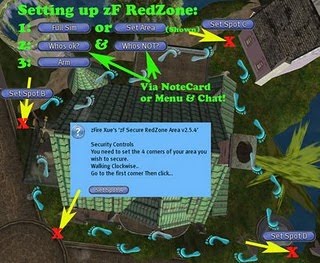
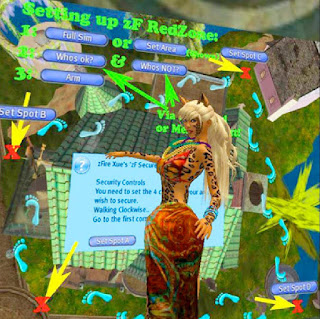
It was eleven years ago this week, March 1-2, 2011, in which Linden Lab finally acted against the controversial Redzone device. For some weeks, this system had gotten the attention of a number of residents as it was advertised as an alt-detection security system. The idea advertised by creator zFire Xue was that places with this system would be able to ban alts of someone on the Redzone database by looking at their ISP number.

Redzone quickly gained criticism from a vocal group that was probably small at first, but growing. Part of the complaining was he was using an inaccurate way of tracking people as ISP numbers are frequently shared. But more worrisome was concerns that the data could be used to stalk people. Not only did Redzone mean the chance the information could be potentially be used to find someone in Second Life using an alt to avoid harassment, but could be used by a stalker in real life to hunt down someone's home address.

Linden Lab was slow to act against Redzone at first, one New World Notes article quoting Samuel Linden as saying, "We do not consider IP gathering to be an actionable security exploit." So in the absence of action from the Lab, some of the critics formed a group called "Greenzone." They began offering a HUD that would detect the use of Redzone at an area and alert the user.

Eventually, Redzone would get the attention of Second Life media. Not just the Herald which was quicker to pick up on dramatic stories, including an interview with zFire, but New World Notes, the Dwell on It blog, and eventually the Newser with a tounge-in-cheek article by Any1 Gynoid. It would also be the subject of an episode of the Tonight Live SL tv show as two of Greenzone's members were interviewed. And soon zFire claimed his security systems would soon start asking permission before collecting information from anyone. But this was soon followed by tales that not only was this not the case, but he was adding the names of critics to the banned database list. There were also reports of hackers breaking into the Redzone database.

Perhaps part of the reason people were alarmed was the time the Redzone controversy took place. 2010 had been a difficult year for Second Life, with 1/3 of Linden Lab laid off, CEO M Linden resigning and Philip taking the helm as the temporary one until the end of the year, the merger with the Teen Grid and scares about what introducing teens might mean to people whom enjoyed adult activities, the Emerald controversy in which users of a third-party viewer had their computers hacked for the purposes of launching a DDoS attack on a critic followed by the banning of the viewer and a few of the team, and the tales and rumors that Second Life was about to be shut down or bought. It's fair to say the confidence of many residents was still shaky, and Redzone just added to their anxiety, "the Emerald decable all over again." The CEO of the Lab at the time, Rod Humble, had only been in for a couple months, and was likely still getting the hang of things. That may have been part of why the Lab was slow to act.

In any event, on Tuesday March 1, 2011, the Lab removed Redzone from the Marketplace store and "asked for removal by no later than today of all zF Red Zone functionality that discloses any alternate account names." On the JIRA made against Redzone, Soft Linden posted, " I got the go-ahead to give an update on zF Red Zone specifically. Again, thank you for the ARs with specific info about violations. These have been very helpful for letting Lindens know what's going on." Tateru Nino would state on "Dwell on It" that the Lab gave ZFire certain conditions before he could sell Redzone once more. Hamlet Au would state on New World Notes that Soft Linden informed him that the Community Standards page was updated "to more explicitly state that alts are protected from disclosure."

ZFire was not cooperative, replacing inworld vendors that were taken down by Linden Lab. He would respond on the JIRA, saying, "Soft Linden did not say ‘zRZ contains malicious intent.’ It does prove that LL is easily manipulated by a flood of ARs." He would post on a forum elsewhere claiming if he was ever banned, he would start running Redzone outside Second Life and accept Paypal payments. He would also comment the ban was futile as even if he left, someone else would come up with an alt detector.

Finally on Wednesday March 16, 2011, Linden Lab would ban zFire Xue from the Grid. But this would be only the start of his troubles. One claim by a Greenzone member that he was a convicted criminal in real life turned out to be true, by the name of Mike Prime. And not letting his parole officer inspect his computer or informing the officer of the money he made on Second Life were violations of his parole. A warrant was issued for Prime's arrest, and he turned himself in on May 2, initially denying all charges against him to the judge. But he would eventually plead guilty to four counts of parole violations, and be sentenced to four months in prison. For two years after his release, the judge ordered him not to work anywhere near computers. And while he could own a computer, his activity would be closely monitored, and he could not take part in "any online auction site ... or any online virtual environment or online social network," Second Life being specifically mentioned. So while it may have been indirect, zFire Xue/Mike Prime was one of the few people to go to jail because of his activities on Second Life. While he was fined $500, it was "waived due to financial capacity." There was no sign of the money he made off Redzone buyers.

One blogger expressed concerns that Redzone could be only the start of a serious privacy scandal for Linden Lab. But that would turn out not to be the case. Although the Voodoo security system was sold as a bot-detector a year later, it would get into controversy mainly because it's owner got into a feud with Greenzone, calling it a griefing group and began threatening to add it's members to his security list. Although a recent NFT contest sponsored in part by Linden Lab raised eyebrows as they'd have to reveal real-life informantion, to this day Linden Lab takes pride in safeguarding the privacy of it's users.

Sources: New World Notes, Alphaville Herald, Dwell on It

Bixyl Shuftan
 

Friday, January 31, 2020

Top Stories of The 2010s, Part Four


By Bixyl Shuftan

This is the fourth of our series of some of the top stories of the 2010s. For part one, Click Here. For part two, Click Here. For part three, Click Here.

The Content Creation Terms of Service Controversy


When content creators build things on Second Life, they allow Linden Lab a certain amount of control over their goods. Some is necessary as glitches on the Grid can easily mess up products and it takes the Lab to be able to manipulate the content to be able to fix it. There's also that when trying to market Second Life, the Lab will use pictures of the content others have made (as do online newsletters covering the virtual world). And for years, of people's creations inworld, the Lab had "rights to use it in Second Life and not much more," which practically everyone thought was reasonable, if not desirable.

Then in September 2013, word began going around about a certain change in Second Life's Terms of Service.

[..]you agree to grant to Linden Lab, the non-exclusive, unrestricted, unconditional, unlimited, worldwide, irrevocable, perpetual, and cost-free right and license to use, copy, record, distribute, reproduce, disclose, sell, re-sell, sublicense (through multiple levels), modify, display, publicly perform, transmit, publish, broadcast, translate, make derivative works of, and otherwise exploit in any manner whatsoever, all or any portion of your User Content (and derivative works thereof), for any purpose whatsoever in all formats, on or through any media, software, formula, or medium now known or hereafter developed, and with any technology or devices now known or hereafter developed, and to advertise, market, and promote the same. You agree that the license includes the right to copy, analyze and use any of your Content as Linden Lab may deem necessary or desirable for purposes of debugging, testing, or providing support or development services in connection with the Service and future improvements to the Service.[..] 

To many, this looked like a power grab by Linden Lab, saying it reserved the right to take people's hard-made content and sell it without contacting the maker in any fashion. Some accused the Lab of acting out of greed. Others felt the Lab was unlikely to just up and sell people's intellectual property outside Second Life, but these poorly-written terms ought to be changed as soon as possible to stop the loss of confidence of content creators. Still others called it an act of stupidity, "Other companies manage to sell digital merchandise without making the artist surrender their rights to their creations - the only thing they actually own. If LL cannot accomplish the same thing, then not only do they forfeit the right to claim to be a visionary tech business, but they will forfeit the right to be in business at all." Aeonix Aeon (Will Burns) speculated this was likely a long-term "exit strategy" by the Lab for the day they no longer felt Second Life would be profitable, selling what they could of the users content after closing the Grid.  He compared it to the owners of a warehouse where publishers go to store their books claiming equal rights to the contents. The slogan "Your World, Your Imagination" he felt no longer accurately applied to Second Life.

The Lab's initial response was to issue a long and wordy statement, saying their intention was to "unify the existing terms of service for our various products into a single version." They would go on to say they respected the rights of content creators expressing their "regret that our intention in revising our Terms of Service to streamline our business may have been misconstrued by some as an attempt to appropriate Second Life residents’ original content." But there was no change in the terms of service.

People in and out of Second Life would respond in various ways. CGTextures, a website for 3D artists, would state it was no longer allowing it's content to be used for Second Life goods, "The new Second Life ToS is simply incompatible with our own Terms of Use." They stated they contacted Linden Lab, and got only "nameless, canned replies … Apparently they don't care about this problem, so we don't see how we can come to a solution." Bryn Oh and other exhibitors resigned from the Linden Endowments of the Arts' committee, "As it stands now I don't feel comfortable luring artists into creating content for Linden Labs who can pretty much do whatever they want with it."

Tuna Oddfellow and Shava Suntzu responded by closing down their Odd Ball performances in Second Life, "Dear Linden Lab -- it's been a nice eight years, but you just broke the social contract with me as a creator in Second Life BIG TIME." Shava expressed her fear that should Linden Lab go bankrupt, that the intellectual property of it's users, such as the builds and images used in the Odd Ball, would end up taken away by it's creditors. They would take their show to the second-largest virtual world, Inworldz, for a time. Qarl Fizz, the former Qarl Linden, announced in his blog that he had deleted his sim, citing Linden Lab's new Terms of Service in regards to content creators, "i can imagine nothing more despicable. truly, you have become the most craven of the internet low life. i can hardly imagine where you might go from here - nigerian scam spams to your users, perhaps?" I myself would comment between the Lab trying to shut down third-party Linden exchangers a few months before and now this move, it was continuing to erode the trust of it's customers.

One of the more important responses was the formation of the "United Content Creators of SL" group, led by Kylie Sabra (Kylie Angel Skyborne) on Sept 29. It would hold a legal discussion in mid-October. Among the things brought up was a seldom-mentioned part of the ToS change, that the Lab could sue a third party in someone's name and act as the person's attorney. Linden Lab's actions were called part of a trend in social median, a number of companies such as Facebook demanding more control of their users' content. While there was the possibility of taking the matter up with the FCC or a lawsuit, Kylie felt the latter was unlikely to succeed as in recent years California law, which Linden Lab fell under, had been more friendly to arbitration agreements. What was the most likely to succeed was a peaceful resolution with Linden Lab.

The UCCSL would send Linden Lab an open letter. Days later, someone from the Lab would respond. It declined their request for an open meeting, "We believe that it would be more fruitful to avoid further debate of the assertions made to date regarding the intent and effect of our updated Terms of Service." But they did say they were "currently reviewing what changes could be made that would resolve the concerns of Second Life content creators." Kylie was initially optimistic, but her later messages to Linden Lab would go unanswered. On January 30, she stated that she had concluded "Linden Lab has no intention of making any change to the Terms of Services." She would step down from the group in March, saying in her last statement the Lab had caused lasting damage with it's relationship with comment creators, "we will never again feel that we are partners in this endeavor with Linden Lab: We will never again trust so blindly as we once did."

But behind the scenes, Linden Lab was going through a change. In mid-January, The company's CEO Rod Humble left Linden Lab, no one outside the company knowing until he made a Facebook post about it days later. The Content Creator ToS Controversy would be one of the darker moments of the Lab under the tenure of CEO Rod Humble, and cloud his legacy.

The new CEO, Ebbe Altberg, would address the issue at the VWBPE conference in April, saying he was looking for a solution. Just as importantly if not more, he spoke more about the issue that hour than the company had in months, which gave residents concerned about the issue new hope. Finally in July 2014, after almost a year after the controversial change had been made, Linden Lab finally revised the wording of it's Terms of Service in regards to content creators. Some of the wording was iffy enough to make a few people hesitate to say the issue was finally over. But most were finally satisfied, and the controversy faded into Second Life history.

In an interview in October 2014, Ebbe Linden felt the main problem wasn't what the Lab intended for a Terms of Service update, but "the way it was rolled out." For the residents however, this was another big example of how by accident or design the Lab had a way of unnecessarily angering it's customers. While later Terms of Service changes would raise a few eyebrows, this would be the last time, at least in the 2010s, such a change created this level of outcry. Exactly why Linden Lab dragged it's feet on the issue for months can only be speculated on. Maybe they were feeling "ignore it and it will go away," or maybe they didn't truly realize what a mess they had on their hands. If so, Kylie Sabra and others are deserving of thanks for keeping the issue in the headlines for as long as they did.

The Rise and Fall of InWorldz

While Second Life may be the most successful virtual world, it hasn't been the only one. Early on, Second Life had some competition from "There." But it never did capture the media spotlight like Linden Lab's world, and shut down in March 2010. This meant that the alternative to Second Life were the various OpenSim worlds. By 2010, two were standing out from the rest, Avination and InWorldz. InWorldz was the more successful of the two. I took a look at it that year, but at the time I couldn't stay there more than a few minutes. Trying again a few months later, I was able to stay on and look around.

So what was InWorldz like? Someone compared it to like Second Life but with fewer bells and whistles and fewer people. The people making their virtual homes there, I had the impression many were attracted to the place as sims were cheaper than Second Life and/or they were fed up with Linden Lab. I imagine for some it was what they saw as a happy medium, smaller than Second Life, but larger than the other OpenSim worlds.

I would pay only a little attention to the place for a couple years afterwards, although did mention there were events going on there. Om January 2012, it would reach a total of fifty thousand users. In May 2013, the number had grown to 75,000. Many of these were probably Second Life residents who came over to get an occasional curious glance like myself. But as only just over a hundred were online at once, I was somewhat skeptical about the place as a source of news for a publication centered on Second Life.

Then came 2013, when Linden Lab made two controversial moves that upset many residents, the Third Party Currency Exchanger ban and the Content Creator Terms of Service controversy. With their way of buying Linden dollars now in jeopardy, some communities made up of residents outside the US began talking about moving to another grid. And when Linden Lab appeared to some to be saying, "anything you bring here is OURS to take and sell as we wish to anyone," some residents began feeling it was time to make a place for themselves elsewhere. And InWorldz would get a lot more attention from the residents of Second Life.

The first big name in Second Life to make the move was Tuna Oddfellow, whom closed the Odd Ball in Second Life and moved it to InWorldz. Their first event in October went without much trouble. In November, an InWorldz Connection Center run by Zia Larnia sprung up to help residents from the larger virtual world more at ease with transitioning over. When it suddenly closed a month later when Zia's partner up and left, Nydia Tungsten would open "The Grid Walkers Welcome Center" with her help. Nydia, along with a number of my friends in the Sunweaver/Angel community were getting increasingly uneasy with Linden Lab's blunders, and felt it was time to set up a "lifeboat" in InWorldz as a place to go to if the Lab shut Second Life down. On Saturday November 30, there would be an "InWorldz Discussion Group" chat to answer questions.

With more attention on InWorldz, I began finding out a few things. One was that Wingless furry avatars were available in one location. Luskwood would also give you a copy of an avatar you bought in Second Life to your InWorldz account if you requested. The Relay for Life was holding a second fundraiser season in the smaller virtual world. Club Fur would be duplicated in Inworldz in Oct 2013. The Podex virtual currency exchanger would offer it's services to InWorldz in Jan 2014. I would end up interviewing InWorldz founder Beth Reischl (known as Elenia Llewellyn inworld). Between this extra attention on InWorldz and the desire of some readers and writers to talk about gaming, there wound be a new SL Newser section: Other Grids and MMOs, later changed to Other Grids, MMOs, and Games. And over time, InWorldz numbers would grow to almost 90,000 in November 2013, and 100,000 on May 2014. When InWorldz had it's fifth anniversary celebrations in March 2014, it was those of an up and coming grid that looked like it had a bright future.

But things were about to change. In January 2014, Rod Humble stepped down as CEO, and in February Ebbe Altberg took his place. Linden Lab under Altberg became more talkative to people, and among the first things he announced was that the controversial changes in the Terms of Service in regards to content creators would be undone. And in July they were changed to the satisfaction of most.

With the reasons InWorldz was getting more attention now relaxed, residents in Second Life became less inclined to hop over. The Relay for Life would continue to hold events there. But overall attention fell. With Linden Lab announcing the development of their next-generation virtual world Sansar, perhaps attention that would have otherwise been paid to InWorldz by residents of Second Life was focusing there. The Newser itself would continue to pay a little attention to InWorldz, but not as much. The numbers of active users would go up and down some, then in Spring 2015 start a decline that would continue. The number of sims would spike in mid-2015, then start to decline. The decline in sim numbers was slower than the numbers of active users, though. Then InWorldz found itself facing competition not just from Second Life, but another OpenSim world. Kitely grew rapidly in just a few years to become about half InWorldz size in the number of registered users. By 2015, the two grids were about equal, and in 2017 Kitely had become the largest of the OpenSim grids. Another grid, Avination, which was a competitor for the largest OpenSpace world in their early days, was the target of theft by criminals, and then hit by a "catastrophic" data failure that led to it going under in 2017.

InWorldz itself began making some moves that raised more than a few questions. This had begun early on when in August 2013 their General Discussion forums were closed, citing an increased activity of trolling and hateful posts that was taking time and effort to moderate them away from their activities in keeping up the grid. In April 2017, they announced they would no longer publish their statistics of how many regions or active users they had. And to a number, this was a signal the grid was in decline, and the owner wasn't sure how to stop it other than hide it. Reischl was distancing InWorldz from other OpenSim worlds, insisting it wasn't really one, "InWorldz has moved on from Opensim a long time ago," and seemed to be saying she was no longer publicizing the statistics because of an "us vs them" attitude there.

In January 2018, Hypergrid Business published an article saying merchants in InWorldz were becoming concerned about the grid's future. "...we have seen a drastic decline in sales and residents," one merchant told Hypergrid, requesting anonymity saying he was concerned about possibly being banned. An "InWorldz Chamber of Commerce" had been set up in fall 2016 "To help promote in-world commercial activity, and to collectively advocate on behalf of their interests." But their director expressed disappointment in her meetings with Reischl, Hypergrid reporting, "She said it was not her job to keep merchants or residents in InWorldz." The article also stated, "Residents have also complained on social media that the founders haven’t been paying attention to their concerns. Of the top managers, owner Reischl moved to Panama and founder and CTO David Daeschler has mostly moved on to other projects." Another resident commented that early on, "one of the best things about IW was the fact that it was so easy to talk to the founders on the forum and they actually listened to us and gave us feedback it made IW feel like a community." But now it was looking more and more like how she saw Second Life at the time she joined InWorldz.

But there was no sign of serious trouble to most until Monday July 23 when Beth Reischl announced the grid was facing shutdown in a few days. At the same time, she set up a Gofundme that was supposedly to save InWorldz. But after most of her goal amount was raised, she changed the objective to starting a new grid. This caused no shortage of confusion and feelings of anger. Zia would comment, "There are a lot of disabled people and older people who play here.  That sort of sudden 'get out' message is hard for someone not in great health to stay up for two days straight and download 8 years of their life." But there was also sadness as after almost a decade, the virtual world where so many hopes and dreams had been created was going away, and on Friday July 27, 2018 the lights finally went out.

Following InWorldz's closure, one of it's staff opened up a small OpenSim grid for former InWorldz residents. Other OS worlds would invite those displaced to go to theirs, and a number did, one example being Kitely Marketplace sales going up 300% in the days after the larger world's closing was announced. A number went back to Second Life. But others held out for Reischl's next world, Islandz. It would finally come online in November 2018. But it didn't last long. On Saturday January 26, Reischl announced that due to real life financial troubles she couldn't overcome, she would have to shut down Islandz, "I'm done with the metaverse. ... I have zero, zilch, zip, nada, just maxed out credit cards." Following a rash of confused and angry statments, the Islandz Discord server was taken down. Instead of a new beginning, it was a sad epilogue.

So what happened? Not being in Reischl's inner circle, one can only guess. It appears that the team she assembled early on was able to make and maintain a great grid. But as people left, the positions were either unfilled or someone not as good took over. With fewer people and less money coming in, she eventually had to borrow money to maintain it. Either the bill came due and she didn't have the money, or as she stated there was a failure to communicate with the people she borrowed it from.

As a resident of Second Life, I couldn't help but feel uneasy. The big thing was seeing the hopes and dreams of hundreds fade away. But deep down, I wondered if years from now I myself would be in their position as Linden Lab would make the decision to shut down Second Life. But our virtual world will likely be around for a long time to come. It is a small irony me and my friends got a few sims there a few years ago as we wondered if our virtual homes were at risk of being closed, and in the end it was the place we were interested in that closed down. As time has gone on, another Opensim Grid, the Great Canadian Grid, would end up being shut down. It would seem as clumsy as they can be at times, Linden Lab ended up creating the virtual world that endures year after year.

Bixyl Shuftan   

For Part Five, Click Here

Friday, February 2, 2018

News and Commentary: More Information on Team Diabetes' Question About Missing Money


By Bixyl Shuftan

After the apology came in, I thought that would be the last time I would write about the topic. But more people had something to say.

The issue started on December 31 When Team Diabetes posted on their blog that someone spammed their group chat saying his breedable group was doing an auction in which the proceeds would go to Team Diabetes. The Second Life charity was doing a fundraising event at the time with another breedables company at the time, so this may have caused a little confusion to the donors. While the man stated he had raised over 100,000 Lindens, about $400 USD, going to charity, Team Diabetes never got any of it, and asked people to start making inquires where the money went. The Newser talked to Vee Tammas Shocker (Veruca Tammas) of Team Diabetes, and was told Oenneo Resident was the one whom had spammed their group chat. I messaged him about the issue, but didn't get a response so went ahead and published the story on January 8.

The response was messages from Oenneo's partner at the time, LoriLynnGrimes Resident, some an outpouring of anger, and the more cordial one saying we should have contacted her and that the money had gone directly to the American Diabetes Association without going through Team Diabetes. I would also get two angry messages from supporters from her. As they were just minutes apart, I wondered if they were alts. Then later on Lori would send a note of apology to Team Diabetes, saying Oenneo confessed that the money never went to charity but to pay for a building, adding the breedables company she and "Neo" were in was dissolved along with their partnership and she planned to somehow make amends. But when the Newser wrote about her statement, she angrily responded that the message was intended to be private.

Some days later, I would get messaged by two people about the issue. One was a supporter of Lori, but in contrast to the earlier people whom were hostile, she made an effort to be friendly, though did ask to remain anonymous. She claimed Lori was no swindler but had been swindled herself by Neo and his supporters. She told me Lori was starting to pay the money to the American Diabetes Association over time in segments, though didn't have any proof as it would mean revealing her real-life identity.

I wasn't sure if this by itself warranted an update, telling her I probably wouldn't do one yet. Then later that evening I was contacted by Lady Digs Jewel (1x1x141 Digfoot). Digs told me she was the builder of the building mentioned in Lori's statement of apology, "The Ark." Lady Digs felt she was "dragged through the mud" by the insinuations she was involved in a charity fraud by association, "I did not receive embezzled funds, because it was paid for well before the event." She sent me a picture of a page of Oenneo's transaction history, which was dated several days before the incident with Team Diabetes and labeled "Final Payment for Ark."

She then told me Oenneo was there with her on the Ark, still under construction, and offered to TP me over. And so I was face to face with the man whom had caused Team Diabetes so much concern. Neo would only converse with me in voice, so the only records I had were the notes I managed to type. The bare-chested man claimed he never got my messages, saying his messages were likely capped, "I have only this to say, I never touched any of the funds. ... The Ark was paid for my money and my money alone."

When I asked about Team Diabetes saying he spammed their chat about his event, he at first told me, "That is completely false, that never happened. ...  I only IMed one person. ... I never spamed any chats, period." I then handed him a copy of the picture that had been earlier sent to me by Vee Tammas contradicting his story, showing he had messaged their chat. He then tried to backtrack, "I did send notices during the event ... but not the 100,000."

Later on, Digs would contact me again. We chatted for a while, and she stated she wasn't trying to imply that she thought I was unfair to her, only that the statement I published could be seen by some as implicating her. This wasn't my intention, and the evidence I've been shown points out she was paid before the incident in question.

I emailed Vee Tammas about the two contacts. She responded that even though the builder had evidence she was not involved in the incident, she felt there were no reasons to take either Oenneo or Lori at their word, "Neo" having been caught in a lie and Lori having a history of responding angrily when confronted and having no evidence of her wanting to make amends. While Neo might not have paid for the building with the money in question, he still collected it from Team Diabetes supporters.

The Newser has written about controversial topics before, such as Monkey Wonder and Voodoo's threats to the Greenzone group. But seldom has information kept coming in about one like this. So what happens next? Time will tell.

Bixyl Shuftan

Wednesday, July 1, 2015

The Confederate Flag's Place in Real Life and Second Life


By Bixyl Shuftan


Lately in real life national news, the Confederate flag has been in the news. Following the murder of nine people in a historic black church in Charleston south Carolina, there have been demands to take down the battle flag of the Army of Northern Virginia from the grounds of South Carolina's state capitol. But it hasn't ended there. Other states have begun questioning the use of the flag in the use of places such as personalized license plates, and some stores such as Wallmart and Amazon that were selling the flag have taken it down from sales stocks. Not everyone has been supporting the takedowns. Former Virginia senator Jim Webb, considered a possible candidate for the Democratic nomination for President, has cautioned against denoucing the flag. Ben Jones, the actor behind the character "Crazy Cooter" in "The Dukes of Hazard" TV show, has defended the use of the flag, even though Warner Brothers has been distancing itself from the emblem of the show's car lately. Apple has gone as far as to take down Civil War games from it's app store because they feature the Confederacy, and it's flag.

For those less familiar with the United States, the controversy stems from different people in the country having very different views. For some, especially those from the Southern part of the country, the flag represents heritage and the Southerners who died defending their land in the American Civil War. To others, the flag represents the oppression of blacks, due to slavery in the South, in addition to segregationists and then hate groups using the flag beginning in the 1950s and 60s. A third group identifies the flag with rebellion and toughness. The flag has not always been unpopular. The flag has frequently been in cartoons and TV shows up to the 1980s, such as the popular "Dukes of Hazard" TV show in which the two heroes drive a race car with the Confederate flag prominently painted on top of the car's hood. Tourist spots had Confederate themed items such as swimwear and beach towels.

In a recent commentary in New World Notes, Hamlet Au brought into question Confederate flags and items made with the flag's pattern into Second Life, feeling because of it's use by hate groups, it's use could be considered against Second Life's terms of service. The result was a lively debate in the comments following his article. Checking marketplace for myself, one could get a flag for just a few Lindens. There were also Confederate (and Union) uniforms, useful for roleplays or a costume party, and confederate themed items such as jackets and swimwear.

Deciding to ask about someone knowledgeable about the Confederate Flag, I contacted DakotaCheynne, whom is with a Civil War roleplay group, as well as the Relay for Life team some members of the roleplay are part of. "He should come and get the correct historical meaning of the flag and what it actually stands for," DakotaCheynne spoke when finding out about Hamlet's article, "unfortunately it's modern day that made the battle flag into what they are talking about now."

DakotaCheyene suggested I talk to SadieIsabella, who was also with the Civil War sim in addition to being a teacher in real-life. After greeting her in Instant-Message and a few lines, she teleported over, "Greetings Sir." I mentioned why I was here, and she responded, "The flag is a choice, just like every thing else here. We choose to fly the Battle Flag, because this is a Historical sim and we represent the 1860s. It was not according to racial issues as is seen in the modern world only by some people."

I brought up the flag's design being on items such as bikinis and on biker jackets. SadieIsabella responded, "Any one can interpret anything to their own choosing. How do they not know that the person wearing the flag does it for historical reasons, not racial? Some people wear the cross as a sign of religion, some as anarchy against religion, and some as decoration. Why not disallow all flags, so others will not be offended. Exactly why we have the freedoms we do, to make choices."

"How many people have to be offended before something is not allowed? I am not offended. And I have black friends who know I fly my flag to honor my ancestors who gave their lives for what they believed is right. I am not a racist, and never intended flag to represent it either."

I asked her when and where she flew the flag. She answered, "I have one in my home. and have carried one to march in parades as the Mary Custiss Lee Auxiliary." Civil War themed events in both real life and Second Life where one place she flew it, "We honor the Confederate Memorial Day as well. We are not 'rising' again, only preserving a part of history that needs to be remembered by all."

SadieIsabella went on, "The Battle Flag is not the real issue. I believe power is the issue. The power to dictate to others what they should believe, do and say, according to a singular opinion. here are many Northerners who participate in the Freedom of their Battle Flag, and it is not a Rebel / Yankee issue. But it was a battle flag, a symbol of freedom to choose for oneself. No one forces the Battle Flag on anyone. At the time it was not even the National Confederate Flag."

"The racial issue occurred when Forest dispanded the KKK, and some continued to use it as a racial issue, and not just against blacks. Notice I said 'some.' Not all Southerners were involved in the radical KKK flag bearing racists. As you tell...it is a personal choice, and these are my opinions and choices, as a citizen of the United States, not a citizen of the Confederate States." *smiles*

I asked her what she had to say to those comparing the Confederate States of America to Nazi Germany, noting there was a WW2 combat roleplay in Second Life, but they had rules against the swastika. She answered, "Some people have made the flag into this type of hatred and I think those people are in the same category. Ask them why they chose the flag, and how to they feel about the Nazi. Usually they belong to the same type of groups, not me. The Nazis enslaved and killed humans. The Southern people did not enslave and kill people. The Northern states also had slaves." She paused, "correction, the Southern people did not kill slaves. The northern and southern states had slaves also."

I brought up the four slave states, using the term "border states," that had remained in the Union. She answered, "In history, border states were either free sates or slave states. Once (a territory was) voted (in) as a free state, slaves where not owned. This war issue was when states were added to the Union, they were either free or slave states to keep the (Senate) even." It was a balance of power issue, keeping the number or slave and free states even so they would be equally represented in the Senate to balance out the more populous North, and that being reflected with greater numbers in the House of Representatives, "As I said, this is about power."

SadieIsabella suggested propaganda then had an effect on how the war would be remembered by the North, "War issues were about economy. They used everything they could to get the sympathies of people on their side, from agriculture to slaves, to trade, to alliances. Had the war been postponed, the Industrial Age of machines, such as cotton pickers and others, would have replaced slaves. But money was the issue, and the South was rising in power in Congress. Slavery was a huge issue, and was used to tip the scale of sympathy. The North did not offer to provide for their well being by freeing them. They really didn't care, as long as the power was in their hands. And our government is the same today, power and control are the issues of the individuals and the group."

She then concluded, "I am an American, who appreciates all the sacrifices that the soldiers of our country have made and are making, even today. I salute the Confederate Flag, but I pledge allegiance to the American Flag. ... I will step off my soap box now. ... thank you for listening." DakotaCheyene told me, "I"m so glad you have come over and trying to make known the other side of the issue."

We discussed the Civil War roleplay for a while, then SadieIsabella had one more comment about the efforts to censor the Confederate flag, "If this proceeds and is successful, I wonder what doors will be opened next? When will it end, when there is no more history to preserve, and we are a conquered nation?"

The Civil War RP sim is in Dakota (240, 94, 28). So far, only human avatars can be active participants in the roleplays, but for the parties anyone who can fit through the door is welcome.

*note* Hamelt Au wrote about the issue again as I was writing this article. Apparently he has concluded Linden Lab is declining to intervene in the Confederate flag issue. He expressed disapointment, but some of those commenting disagreed, "Get a life, dude."


Bixyl Shuftan

Sunday, July 21, 2013

World of Warcraft To Test Using Real Money to Buy Experience Buffs


By Bixyl Shuftan

While World of Warcraft players have been busy with the Battle of the Barrens and other places, earlier this month there was some news that Blizzard would be testing out something never done before in the game - allowing players to gain experience faster by using real money purchases.

The buying of game items, or "micro-transactions," are not new to gaming, or even to WoW. Some smaller Internet games such as Evony allow players to purchase a variety of buffs, better equipment, etc. As these purchases give the buyer an advantage over free players, they are sometimes called "Pay to Win" games. Larger MMOs have tended to avoid such offers, not wanting to give loyal players who've gamed a long time the impression someone can just buy their way to the top and avoid the time and hard work in getting there. Instead some, WoW included, offer the sale of items that do not affect gameplay, such as mounts and pets.

In Summer 2011, Eve Online players protested plans to allow the purchase of items that would affect gameplay, and eventually the company relented. "It's one thing to add non-game items and make money off that," one reader wrote, "It's another entirely to screw up the whole game mechanics so that veteran players who've worked a year to get where they are get bumped by some snotnosed kid who's using Daddy's credit card to buy his way to the top."

Earlier this month, Blizzard forum moderators admitted to plans to "exploring" options after it was discovered there were plans for items to be sold at an "in game store," such as an "Enduring Elixir of Wisdom" that gave a 100% experience boost. The store will reportedly be only on Asian servers at first, and the item is described as currently only on test servers and only available to players level 85 or more.

The response from the players was mostly negative, "The item itself is mostly harmless … the problem is that it opens doors to (the) 'Pay to Win' model. And we already pay the game and a monthy fee just to skip that." Some stated they would leave the game, or feared others would if the In Game Store was released. Some stated they wouldn't mind the option to level other characters this way once a player had brought one up to the maximum Level 90 anyway.

This comes soon after some less than happy news for World of Warcraft. In May, Blizzard stated they had lost more than a million players in the first three months of the year, from 9.6 million n January 2013 to 8.3 million in March. While most of the losses were from Asia (where the in-game store will be tested), some Western gamers left as well. This continues a long-term drop from it's peak of 12 million in 2010, and the company admitted further decline was likely, "we expect to have fewer subscribers at year end than we do today." The reasons for the drop, players were leaving for cheaper games, notably those playable on mobile devices. The video game industry, in addition to virtual words such as Second Life, has been facing increased competition from handhelds such as tablets, iPods, and others.

At the time, Blizzard stated they would be investing more in WoW, with more storylines and features. Since then, the Darkspear Rebellion was introduced. But that even the largest of MMOs would resort to "dabbling in the darkest gold-producing alchemy of them all" of microtransactions allowing those with deeper pockets an edge over conventional players, this could be taken as a sign that even the people behind World of Warcraft are wondering if it won't be long before they no longer dominate online gaming.

Sources: Gamasutra, BBC News, Rock Paper Shotgun, Blizzard Forums,

Bixyl Shuftan