Showing posts with label stories. Show all posts

Wednesday, January 22, 2020

Top Stories of the 2010s, Part Three


This is the third of our series of some of the top stories of the 2010s. For part one, Click Here. For part two, Click Here.

The Currency Exchanger Bans

Getting and/or selling Linden dollars used to be a lot more complicated than it is now, especially if you lived  outside the United States. Some residents living outside North America found the LindeX too difficult or impossible to use. For residents who couldn't buy or sell Linden dollars quickly or easily, or would rather deal with someone other than the Lab, a number of third-party virtual currency exchangers went into business to help and make a little money for themselves. Among these was Podex, owned by Jacek Shuftan, which was the Newser's first sponsor. Every month, we would run commercial adverts for them, notably the misadventures of a bungling burglar who kept trying to rob the place but always failing hilariously. The "Clumsy Cooper" adverts were ones I loved doing, and got readers chuckling.

But in early May 2013 came an unwelcome surprise. Linden Lab changed it's terms of service to ban the buying and selling of Linden dollars with anyone but the Lab. The results were protests by residents, some saying as they couldn't use the Lindex they would have to abandon their virtual homes. There was talk of entire communities up and moving to Opensim. Some exchangers shut down right away. Jacek remained open, trying to talk to Linden Lab. But the Lab would not listen to him and chose to suspend his account. Finally, the Lab did a partial reversal. The currency exchangers could reopen after getting permission as "authorized resellers," but would operate under tighter conditions. Most notably, they could only sell Linden dollars, not buy. Several were initially accepted. Podex and others would have to wait until early June to be back in business.

Exactly why the ban came to be was the subject of some debate. Many felt the Lab was acting out of greed, seeing the currency exchangers as making money that they felt belonged to them. Others felt something else was at work. A couple months earlier,  the US Treasury Department's Financial Crimes Enforcement Network (FinCEN) issued a statement on guidelines for the regulation of virtual currencies. While this was written with virtual currencies such as Bitcoin in mind, and Linden Lab called the Linden dollar a "virtual token" or a "limited license" that could be traded inworld, one commentator felt it could potentially apply to Second Life's currency as well. "FinCEN goes by the approach 'If it looks like a duck, and quacks like a duck, it is a duck,'" he stated, "And Linden Dollar sure does 'quack' like one. Linden dollar is a virtual currency because it has value in real currency (a buck will buy you about 270 linden bucks); and people buy good and services with it." So perhaps the Lab panicked and pulled the plug without thinking of the consequences.

All was well for two years. Then in June 2015, Linden Lab announced it was disbanding the Authorized Reseller Program, and the currency exchangers had until the end up July to conclude all business. The Lab stated, "we have expanded the payment options for Second Life users, and today, you can easily purchase L$ in more countries than ever before." Once again, there were protests, but not quite at the level of before. So despite the calls for Linden Lab to reconsider, including a petition with over a thousand signatures, Linden Lab this time would not relent.

And so the virtual currency exchangers closed, including Podex. And by November, their office in Second Life had faded away. Nothing else from them is known to be around, save for one of their machines at the Newser office left up as a momento. The Newser's first sponsor was gone, and the character from so many of it's adverts would end up in one more story, a piece of SL fiction, and no more. Final salutes to an old friend.

The 2016 Presidential Election

Covering politics can be tricky as you risk alienating half your audience. If your job is to inform the public instead of appealing to readers to favor one side, you have to put aside your personal prejudices. In Second Life, it's trickier in some ways as many people come here to briefly escape real life, but so do a few whom seem to be intractable political animals (with or without furry avatars). Politics can be one of the more annoying parts of life or virtual life to many. But it's something that can't be ignored either as the results can affect you personally.

I covered the previous two Presidential Elections. The 2008 Election between Barrack H. Obama and John McCain was overall polite and even tempered, for an election. The 2012 Election between Obama and Mitt Romney, not so much as supporters on both sides seemed more annoyed and irritated with one another. The 2016 Election was a strange one in that an outsider and political newcomer, Donald Trump, won the nomination for the Republicans. While unpolished and reckless, Trump was a master of social media and had a way of making the debate all about him. Hillary Clinton, the candidate for the Democrats, was intelligent, but awkward and aloof. With the increasing political divide, they were two of the most unpopular Presidential candidates in recent US election history, and it was among the most divisive elections as well.

Early on, there were a few small political builds. Then in March came larger ones, a Trump supporter named JP Laszlo built the Trump Manor, based off of Trump's manor in Florida. A supporter of Clinton's opponent for the Democratic nomination, Bernie Sanders, built the Sanders HQ. Later in May, another supporter would build "Feel the Bern."

In April, things heated up when some Trump supporters erected a huge wall in front of the Sanders HQ, making a few comparisons to the "War of the Jessie Wall" (NWN link) early in Second Life's history. Trump supporters called it a prank. Sanders supporters called it an "annoyance" that overshadowed a number of examples of griefing. The people I talked to told me they wanted level-headed dialouge, but there was no agreement on what the "rules of engagement" should be. With some trolls causing trouble at the Sanders HQ in the name of Trump, there were calls for Linden Lab to take action.

In early June, the Trump Manor would suddenly close it's doors, with plans to build a larger location, as did the Trump Wall. Ironically, a Clinton HQ would be set up on the very spot it had been.  Bay City would also get a Clinton HQ.

Then came some surprising news. Linden Lab had banned the leader of the Trump Organization, as well as several other member of it's group. Exactly why they were banned the Lab didn't say, though as a map view of their private sim showed a large black eagle, Hamlet Au compared it to a Nazi symbol. JP Laszlo would later come out as a supporter of Woodbury, an infamous group associated with griefing and trolling, which some Democrat supporters called further evidence their opponents were basically trolls.

After that, the political drama in Second Life slowed down. The remaining Trump supporters basically laid low, some creating a "Trump Pub" where they kept to themselves. Locations such as the Clinton HQ in Bay City would show broadcasts of the Presidential Debates to small audiences.

In real life news, the plurality of polls showed the two candidates were roughly even, with Clinton having a slight lead but small enough for a statistical tie. So many Democrats were cautiously optimistic and some Republicans were prepared for a loss. But Trump ended up winning the election, after a long nail-biter of an evening in which the results were not official until close to Midnight SL time. On my Facebook feed, about a third were in a celebratory mood. About a third were shocked and dismayed, wondering how this could have happened and some accusing the voters of "betrayal." About the only liberals with less than heated opinions were a few Sanders supporters whom were going "We told you so." It seemed only bout a third of my social medial contacts didn't say much of anything on the subject.

After the election results many of the political left were in shock and fear, some of those in Second Life going to "Safety Pin" support meetings. While the mood of those who supported the Republicans was more cheerful, some were less than enthusiastic. The Presidential Inauguration's largest celebration would take place not in an American sim, but London City.

The election didn't settle political matters as many of Trump's opponents grew increasingly bitter, the most visible example of this in Second Life being the artist group known as "Avatars Against Trump." Their artwork had one or two pictures that were funny, poking fun at the new President. But most were dark and humorless. Not all who supported him were satisfied either. One conservative podcaster would go on hiatus, saying political debate had become an echo chamber and he didn't feel like taking part in debate that had nothing new to discuss.

After that, the Newser didn't write much on political matters. This was partly due to a few complaints from readers. No one complained about bias. In fact we were praised for making an effort to cover both sides. But some grumbled that they came to Second Life to escape real-life matters such as politics, one comparing the Dems and Reps to two bands of shrieking monkeys throwing poo at one another. And with the election finished and the immediate results covered, it was time to move on.

Four years later, the country is facing another Presidential election. And now, the Newser has to decide how much to cover the "shrieking monkeys" once more.

Bixyl Shuftan

Monday, December 30, 2019

Top Stories of The 2010s, Part Two


By Bixyl Shuftan

This is the second of our series of some of the top stories of the 2010s. For part one, Click Here.

The Pony Community and Bronyville's Fall

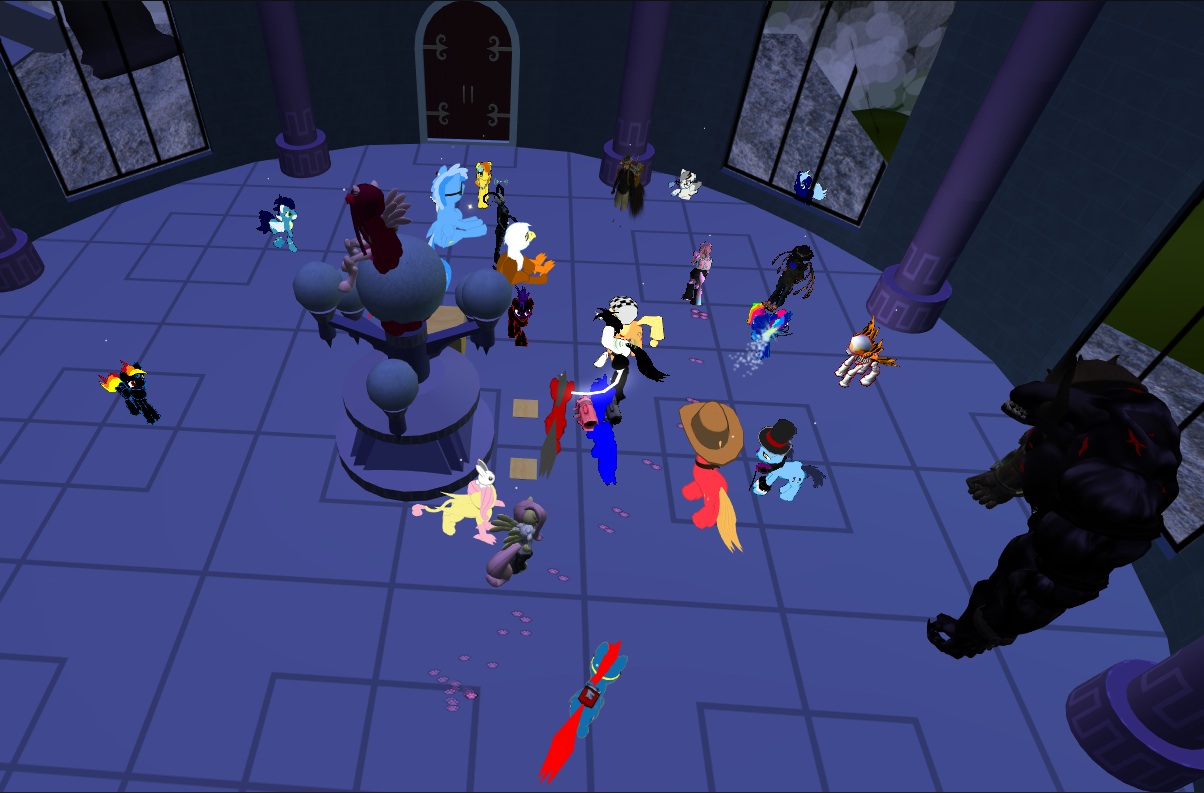
Second Life is noted for it's variety of avatar types. The first ones were human and humanoid. Soon after came other kinds, neko, furry, tiny, and dragon. Since the Newser came to be, two more have come about. There are the petite avatars, which I've seen mostly pixies. And then there are the pony avatars, based off the characters of the "My Little Pony: Friendship is Magic" cartoons. Unlike previous "generations" of the franchise, "Friendship is Magic" gained a following among teenagers and young adults. It wasn't too long after the cartoon started airing when the cartoonish pony avatars started appearing in the virtual world, and in May 2011 came the Bronyville sim. It quickly became a thriving community. While naturally there were a few bored trolls showing up to harass the ponies, they were quickly dealt with.

Then in July came real trouble when Linden Lab took down Bronyville. It turned out that the sim's two owners were ban-evasion alts of people the Lab had banned from Second Life. For many communities, this would be the end. But once the ponies recovered from the shock, a new sim was acquired and named Bronytown. A few months later in February 2012, they had largely recovered.

Several years later, the pony sims are still around. Trotsdale and it's surrounding sims soon replaced Bronytown as the best known pony area. But there are others with their own people. As the cartoon series that inspired the fans to create the community and sims aired it's last season this year, it should be interesting to see what the Second Life ponies do.

The S.S. Galaxy's Closing

I had the fortune to visit the SS Galaxy in it's early years. This was a cruise ship built in Second Life. And what a ship it was! Three sims long, it was not just the largest ship in the virtual world, but one of the largest structures of any kind inworld. And like a cruise ship, people could rent cabins, and there were numerous parties. It would be one of the first places the Newser would report on.

Then on April 26, 2015 came shocking news to the ship's fans: the SS Galaxy would be shutting down. Why was the ship being scrapped after eight years? An investigation revealed the ship had recently suffered the worst griefing attacks in it's history over a period of several days, and the Linden they talked to told them they would be allowed exactly one rollback to fix the damage and then no more, period. Fans gathered for a few last parties. And on May 3, the place closed down, leaving only screenshots, memories, and a number of residents feeling it's leaving was the result of the Lab acting like it didn't care about longtime customers.

Finally, the Lab realized it had goofed, and on May 13 it was announced that the ship would be coming back, but under Linden ownership.  In September, the ship was once again on the Grid. While residents were happy to see it back, their enthusiasm was dampered by that it was basically a museum piece. Gone were the live events, the renting of cabins, and the crew to greet people.

The closing of the SS Galaxy would be just one of a few incidents that year that got some people wondering about Linden Lab's intentions and competence.

From Passionate Redheads to Sunbeamers

Over the years of covering the Relay for Life,  I've covered the efforts of many teams. Some have continued their efforts year after year, such as Team ACTS and the Gorean team. And some make a good showing for a short time, such as the Relay Wizards and Team Strange Journey, then fade away.

The first Relay team I got to know really well, and the one I eventually joined up, were the Passionate Redheads.  This was a team of both human and furry residents led by co-captains Sabine McGettigan and Daaneth Kivioq. Having been raising money for the Relay since 2007, it was clearing in the big leagues, raising over a million Lindens in 2010. Many of it's team members were from the Sunweaver community, including estate owner Rita Mariner. So it really was the community's team. It had some great campsite builds, such as the "Wild West" one in 2009. And there was the late Artistic Fimicloud who lost her life to cancer, whom became a symbol of the team's determination.

But in April 2011 came some horrible news. Co-captain Daaneth suffered a stroke. Shocked, the Relayers sent him numerous well-wishes and held events in his honor. Various members stepped up to raise a some Lindens of their own, such as Rita, Nydia Tungsten, and myself. And the Relay Weekend went great. What could have ended up a canceled year ended up another successful one for the team, with Daaneth being awarded the Spirit of Relay for 2011 in the "Wrap-Up" event in August.

Sadly, the stroke had lasting effects. Shortly after the 2012 Relay season started, Sabeen left the team and Daaneth both left the team and took an "indefinite break" from Second Life for personal reasons. placing Dusk Griswold and Lomgren Smalls in charge. Despite this trouble in addition to others being sidelined due to real-life troubles, the team made it to gold level, and onto the Relay Weekend.

In January 2013 came more sad news, the Passionate Redheads were disbanding. After six years and many accomplishments, the banner of the Readheads would no longer be paraded down the Relay track. The Sunweaver community was saddened, but two people stepped forward to form two teams. Sadly, the leader of one would soon leave Second Life for personal reasons. But Sunweaver leader Rita Mariner would lead the Sunbeamer team. But while the Passionate Redheads had been a proven team, with the Sunbeamers we were basically starting all over, "We are a small team." Still, we persisted with events and our campsite for the Relay Weekend, in which we reached Silver rank fundraising. But by 2014, the team was making Gold once more.

Since then, the Sunbeamers have continued to do well year after year. The "small team" became "the little team that could," and a force in the Relay. But we haven't forgotten our roots. Every year in the campsite, one can find a small pink fox statue in honor of Fimi.


Mesh

On August 23, 2011, came a new way of building things in Second Life: Mesh.  One complaint Second Life was getting in the late 2000s was that it lacked the detail of many popular online games at the time. So in 2010, Linden Lab announced it was working on a Mesh import project.

Reactions were somewhat varied. Some were anxious to see what they could do with the option, or at least curious. Others were skeptical, or fearful that the Lab would end up blocking viewers that couldn't see it. Another concern was security vs safety vs convenience, that mesh would make it much easier for the unscrupulous to import and sell material others had copyrighted, and that Linden Lab's security precautions would end up blocking some builders or making it too big a hassle for them to continue.

After it was enabled, there were some early adopters. While at least some called it the most important development in Second Life that year, others expressed skepticism, among them myself. I and others felt there were too few mesh-enabled viewers being used in the first several months for mesh to have that great of an impact. There were other problems as well. While touted as a way to make objects that would be more efficient to process, the truth was it took skill to do this as a mesh objects "prim equivalency" could easily surpass the same item made with prims and end up causing more lag. And then there was that for the first time in Second Life, people had to worry about their clothes fitting. Many people dreaded having to shop for clothes in real life as they had the hardest time trying to find clothes that would fit, and now the issue had come to Second Life. 

Still, skillfully made mesh objects and avatars looked better with smoother movement, one example being that mesh furry avatars have smoother speaking movements. And with mesh people could accomplish some things they couldn't before, such as the creation of impossibly tall avatars.

The use and adoption of mesh has been a long slow process. Linden Lab for instance would offer mesh starting avatars a few years later in 2014. But unlike earlier starter avatars, they couldn't be modified to be slightly taller or shorter or slightly different facial features, or able to wear another set of clothes. So in 2015, they were replaced with another set of starter mesh avatars, though some people commented they looked less like what one could expect in Second Life and more like "The Sims." These comments would continue with the added Fantasy and Sci-fi inspired starting avatars in 2016.

Over time, mesh would see improvements. In 2014, Fitted Mesh allowed for better fitting clothes, though while a step forward wasn't a perfect solution. In 2018 came Animesh, which offered the promise of much more detailed NPCs/bots inworld. 2019 would see the arrival of 'Bakes on Mesh,' which offered the promise of less complexity for detailed avatars.

Today, while mesh has won over much of Second Life, perhaps the majority, there are still some whom have little or anything to do with it. It's made dressing more complicated, and while Fitted Mesh has helped, there's still the problem of mesh outfits not quite fitting one's avatar. All the updates eventually mean some third-party viewers that seldom get updated soon become less and less useful as more and more glitches appear due to more avatars using material made possible by recent updates. It's also been brought up has Mesh been a good thing for Second Life's content creator community. While anyone can still learn to build and script, the arrival of mesh meant creators had to learn more to make a product the masses would buy, perhaps to the point that someone with the skills to make fine mesh clothes would make more money using similar skills outside the virtual world's community. In the end though, the demand for mesh products has ensured it's become an established part of the virtual world.

As Second Life enters the 2020s, the story of Mesh is still being written.

For part three of the series, Click Here.

Bixyl Shuftan

Friday, December 27, 2019

Top Stories of The 2010s, Part One


By Bixyl Shuftan

As the decade comes to a close, there's been some looking back at some of the events that have happened. For the people of Second Life, ten years ago there was the creation, the rise, and then the peaking of the popularity of the virtual world. For the 2010's, Second Life hasn't made Big Media very much. But there's been no shortage of events that were for a time were of great interest to many residents. Some made news more than others. So here's some of the decade's top stories.

The Linden Lab 30% Layoff

Just a week after the Second Life Newser got started came our first big story to cover, when on June 10 2010 Linden Lab announced a "Restructuring" in which thirty percent of it's staff lost their jobs. Residents were shocked at the news. Gone were favorites such as Blue and Teagan Linden. One resident reacted by setting up a memorial to those whom lost their jobs. There was an also an "Independence Day" party in their honor as well.

A company giving a third of it's staff the pink slip is usually a sign of deep trouble. So naturally people were worried about what was going to happen next. Rumors were around for months Linden Lab was in talks with Microsoft for a buyout. This was just one of many changes at the Lab in 2010, including the resignation of M Linden as CEO and Philip returning for a short time as intirem CEO. Second Life's future was very much in doubt for the remainder of the year. It wasn't until December with the arrival of a new CEO, Rod Humble/Rodvik Linden, that the fears of Second Life being closed down had largely faded.

Emeraldgate

2010 was when Linden Lab began offering a new viewer for the residents, Viewer 2. It was not popular with established residents, and people looked for alternatives. The Emerald Viewer, offered for free by a group of volunteers known as Modular Systems, or Team Emerald, quickly became the most popular alternative, the first third party viewer to hit it big.

But on August 20, there was a DoS attack on a website of one of their critics. The attack was traced to computers using the Emerald viewer to access Second Life at the time. One of the team stepped down, and the Lab presented them with a list of demands, notably three of the team stepping down. When one refused to, the team split in two. One group led by Jessica Lyon would go on to start Team Phoenix and the Phoenix viewer. The other faded away following Linden Lab blocking the viewer from accessing Second Life, some of their leaders banned by Linden Lab or never seen again.

Emeraldgate is notable as it's the incident that sparked the creation of what now is Team Firestorm, the people behind the Firestorm Viewer that remains the most popular viewer used by residents.

The Teen Grid Merger

Also in August 2011, it was announced at the Second Life Community Convention (or the SL con) that Linden Lab would soon be closing the Teen Grid, and those 16 and 17 of age would be allowed in Second Life. Philip Linden called the grid with it's population of under 18 residents a "mistake," and expressed confidence that Second Life with it's filtering system could handle the influx of 17 and 16 year olds.

But the announcement created a storm of comments by residents whom feared this would soon lead to adult areas being shut down. The Lab tried to assure residents that there would be a smooth transition. And there were efforts by some residents to welcome them in. But others called this an accident waiting to happen, having no confidence in Linden Lab to do the job, "I'm sorry LL shafted you all. ... many of us BEGGED for a PG continent that you and us could have and be safe together. We saw what was coming and wanted to make the grid safe for all. Now it isn't safe for anyone.”

As it turned out though, not many of the 16 and 17 year olds would be coming to the Main Grid. When the Teen Grid was turned off on Dec 31, 2010, most apparently went to online games or other Internet activities. Exactly why is speculation, some wondering if the teens just didn't want to hang out with "old people," but preferred a place where they could be with just their peers. Others felt the teens were around, just simply fibbing about their age and always had been.

The Redzone Controversy

One thing many residents fear in Second Life is someone harassing them getting around bans by creating alts to torment them further. So it's no real surprise eventually someone starting offering an "alt detector." As far back as December 2010, news started going around about "Redzone." That the creator developed juvenile products such as a "Toilet HUD" probably helped in the masses not taking the product product seriously at first, especially with stories that the product stunk at delivering what was promised. Privacy activists however were very worried Redzone could potentially be used to trace people to their real-life addresses, leading to doxxing and stalkers taking their harassment to real life.

Eventually, Linden Lab responded, taking down Redzone from Marketplace on March 2, 2011. Redzone's creator, zFire Xue (Michael Prime), remained defiant and was banned a few weeks later. It turned out that zFire was a convicted criminal on parole, and in May he turned himself in when a warrant was issued for his arrest. He would be sentenced to four months in jail, and the judge ordered part of his conditions would be parole were no access to computers or Internet access, Second Life specifically mentioned in the ruling.

For some residents, it was "Emerald all over again" in that a malicious coder had caused so much worry for the residents. Privacy activists such as the Greenzone group remained vigilant for any other alt detector that might cause trouble, getting into a tangle with the Voodoo security system a year later. Fortunately, there wouldn't be another like Redzone.

Second Life Ninth Birthday

2012 was a year Linden Lab put some distance between itself and the residents. There would be no snowball fight between the Lindens and residents. Nor did the "Kiss a Linden" Valentines Day event take place. Later in the summer, it was announced there would be no Second Life Community Convention that year. Residents expressed disappointment at these events being canceled. But then on April 16, 2012, Linden Lab announced they would not be organizing the Second Life Birthday celebration that year. In a statement later on the forums, they stated they were leaving it up to the residents, expecting numerous smaller celebrations.

But instead of following Linden Lab's suggestion, some residents banded together to hold the Second Life Ninth Birthday themselves, with both sponsors and some noted SL personalities behind it. Those taking part had only a short time to get things done, so they hurried things up. It would take place on a twenty sim area, and last from June 18 to June 24. There would be lots to see and do. And the event ended with fireworks at the Cake Stage. While there were a few minor things that went wrong, the SL9B was a definite success.

For five more years, the SLB events continued to be in the hands of a volunteer staff. Although Linden Lab would slowly start to be more involved in the anniversary with "Music Fest" and shopping events, "The Birthday" was still resident-run until the SL15B. In 2019, the Lab finally fully took over, saying over time they had been observing what worked and what didn't. While it meant saying goodbye to some new traditions such as "The Cake," the residents as a whole were glad Linden Lab was taking care of Second Life's anniversary event.

*  *  *  *  *

For part two of the series, Click Here.

Bixyl Shuftan

Monday, November 26, 2018

Eleven Years of Reporting


By Bixyl Shuftan

It was about eleven years ago that yours truly got his start as a reporter here in Second Life. Before coming to Second Life, I had been writing a few science-fiction stories and posting them on a personal website. They got some reads, and a little fanart. But by 2007, I felt it was time for a break, so put that on pause. In the meantime, I had taken an interest in Second Life, and that year started logging in on a regular basis. Wanting to know more about this virtual world, I began looking up websites and blogs. I eventually came across a few newsletters, the one getting my attention the most being "Second Life Newspaper." It was owned by JamesT Juno and run by Dana Vanmoer. After a while, I came across an invitation for it's readers to send in "reader submitted" articles. So I wrote a few and sent them in. James and Dana were impressed, and invited me for a job interview. After several minutes of talking, I got the job.

Although I wasn't always sure what would make for a good subject in the first few weeks, I soon got the hang of things. I would write about a variety of subjects about the people, places, and events of Second Life. While occasionally my stories were a bit on the sensational side, such as writing about "Zig Zag" and her adult media company, more often than not, they were about how Second Life sometimes mirrored real life, such as the 2008 Presidential Election, people doing good things in Second Life, notably the Vietnam Veterans Memorial and the Relay for Life, the various things people made here, or people just having fun such as the games and virtual pets. And of course I was part of a great time, some who would become my friends.

In Spring 2010, James and Dana were having to deal with real life situations that would not go away, and made the decision to close the Second Life Newspaper. Four of us, Gemma Cleanslate, Grey Lupindo, Shellie Sands, and I made the decision to start a new paper with me as the leader. And so my role changed from just another writer to the head of the team. Over the years, the team has seen people come and go, such as DrFran, Zymbers Slade, Grease Coakes, Majik, and others. But the team remains, with Gemma and I still writing stories.

As Second Life has changed, I've written about new places, things, and people here, such as the development of mesh and Bento. I've written about other virtual worlds, such as InWorldz. And as my friends here also play games outside Second Life, I've written about those as well, such as Minecraft, World of Warcraft, and more. But the main focus continues to be this virtual world. I'm able to write one, two or three larger stories each week, plus briefs for the front page about Linden blog announcements and other breaking news.

So now what? For one, I plan on continuing what I've been doing all along. But I also have something else going on. Before getting into journalism, I wrote a few fictional stories, some short and some long. And recently I've started up on another science-fiction novel, "The Corsean Encounter." This is the story of two men as they end up on an alien world that in some ways is quite familiar, in others very different, in a pivotal moment in it's history, and the decisions they and their friends and enemies make will affect the world for generations to come. As of now, it's slightly less than halfway done. The Newser keeps me busy.

Eleven years later, much has changed. But the primary objective remains the same, getting the word out about the people, places, and events, of Second Life.

"And that's the way it is."

Bixyl Shuftan